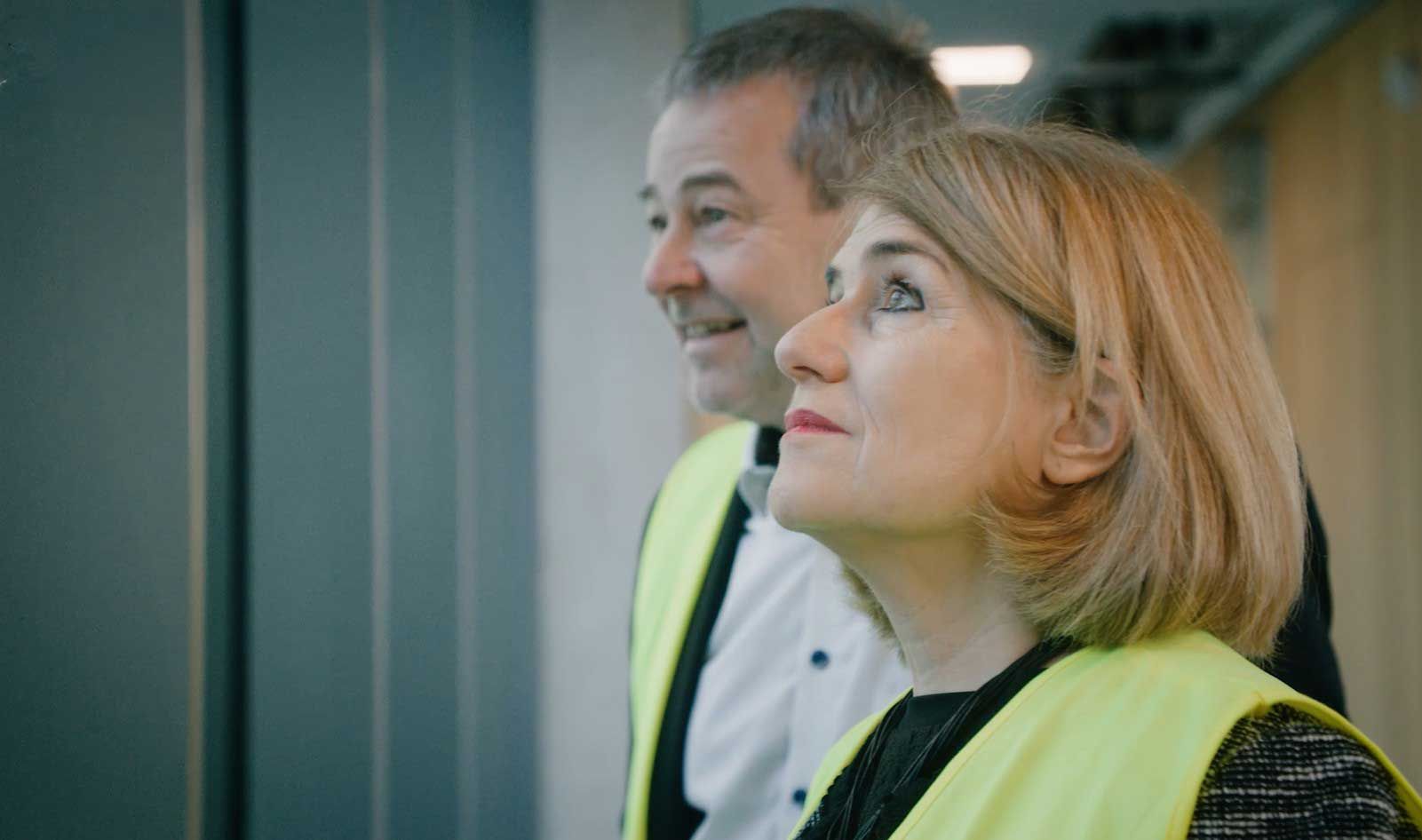
Cellular and molecular tumor biology meets anatomical and histological analysis: At the MedUni Campus Mariannengasse, different perspectives in cancer research are coming together more closely. New spatial possibilities and shared infrastructure lay the groundwork for more intensive collaboration and open up new approaches to understanding and treating cancer.

After activation, data will be sent to YouTube. Further information here: Data protection
The research conducted by Maria Sibilia and Wolfgang J. Weninger operates at different levels and is complementary precisely because of this. Whilst Sibilia investigates the molecular mechanisms underlying tumour initiation and development, Weninger analyses the structure and organisation of human tissue.
‘The best scientific ideas usually emerge during discussions, over a cup of coffee, and in the course of small talk.’
“My research group focuses on fundamental questions: why does cancer develop in the first place?” says Sibilia. A key focus is on understanding why some patients respond to treatments and others do not. “We are trying to understand why this is the case and how this tumour interacts with its surroundings, particularly with the cells of the innate immune system.” The aim is to influence these mechanisms in such a way that the body itself can play a greater role in fighting the tumour.
Weninger brings a complementary perspective to the table. “Anatomy plays a multifaceted role in both research and teaching,” he explains. In research, the department works closely with clinical disciplines, for example when analysing anatomical structures that are crucial for surgical procedures. Modern imaging and analysis techniques provide new insights into the three-dimensional organisation of tissues.
‘I believe we will launch a great many positive projects. There will be strong interaction with key figures in areas where such interaction has hitherto been lacking, but which will prove immensely beneficial for everyone.’
The physical proximity on the new campus opens up new opportunities for this collaboration. “You often don’t even know what certain things look like in healthy tissue,” says Sibilia. Direct access to anatomical reference material makes it possible to systematically compare diseased and healthy tissue and thereby gain a better understanding of disease progression.
Alongside specific research questions, informal exchanges also play a central role. “The best scientific ideas usually arise during discussions, over coffee and in small talk,” says Sibilia. “You tell each other what you’ve seen or discovered, and a colleague might have an idea about it.” It is precisely these spontaneous encounters that the new buildings at MedUni Vienna are designed to facilitate.
For Weninger, this is a key advantage of the new campus. “I believe we will launch a great many positive projects,” he says, looking ahead to the coming years. “There will be significant interaction with leading figures in fields where such interaction has been lacking until now, but which will prove immensely beneficial for everyone.”
Teaching will also benefit from this development, as it will enable far more practical seminars for students in future. The link between research, teaching and clinical application will thus not only be strengthened, but also become a direct experience for students.
The MedUni Mariannengasse Campus will thus become a place where different perspectives converge and new ideas emerge. When tumour biology and anatomy work more closely together, new approaches to cancer research emerge and, with them, potentially new ways to fight cancer.