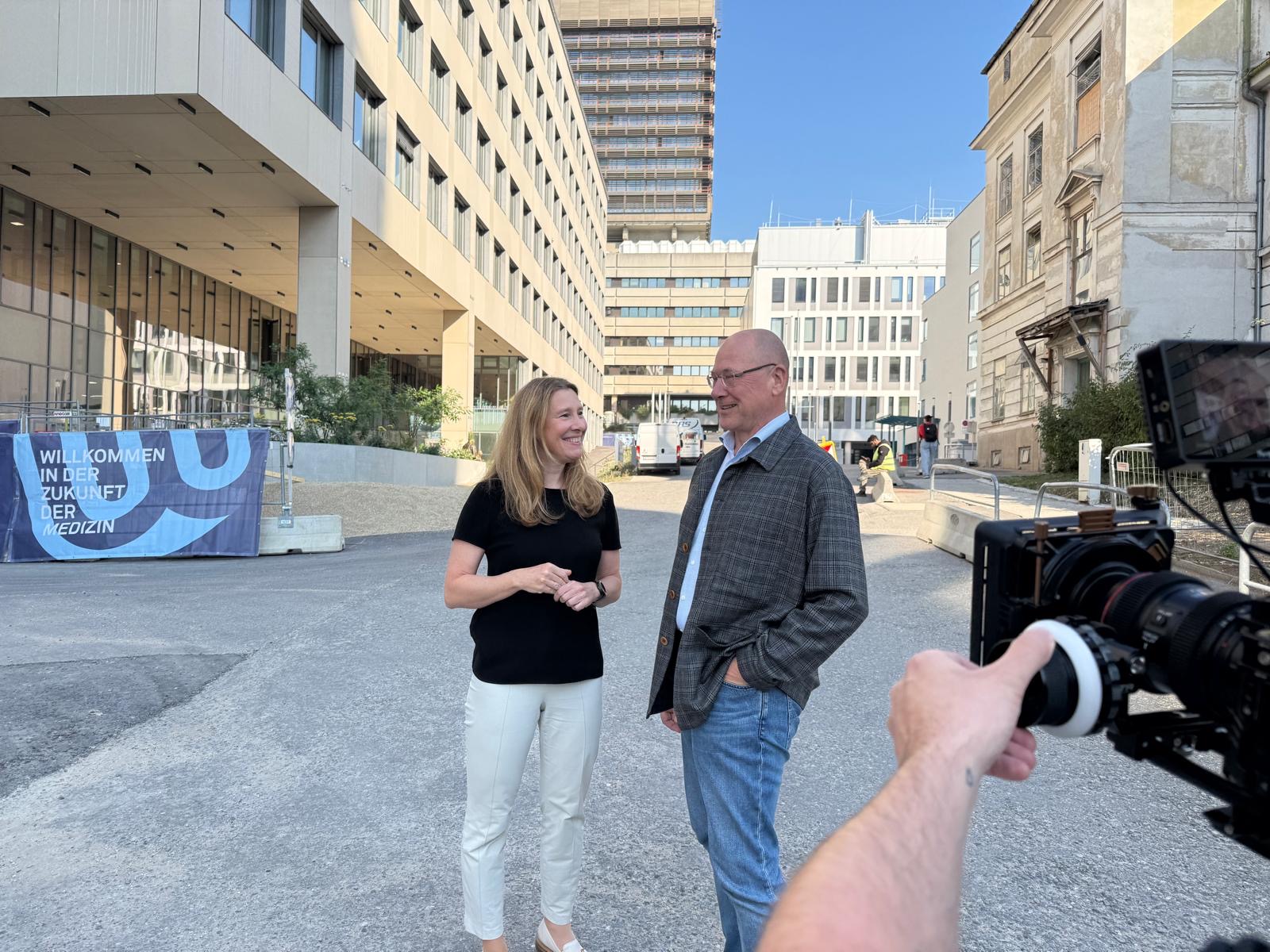
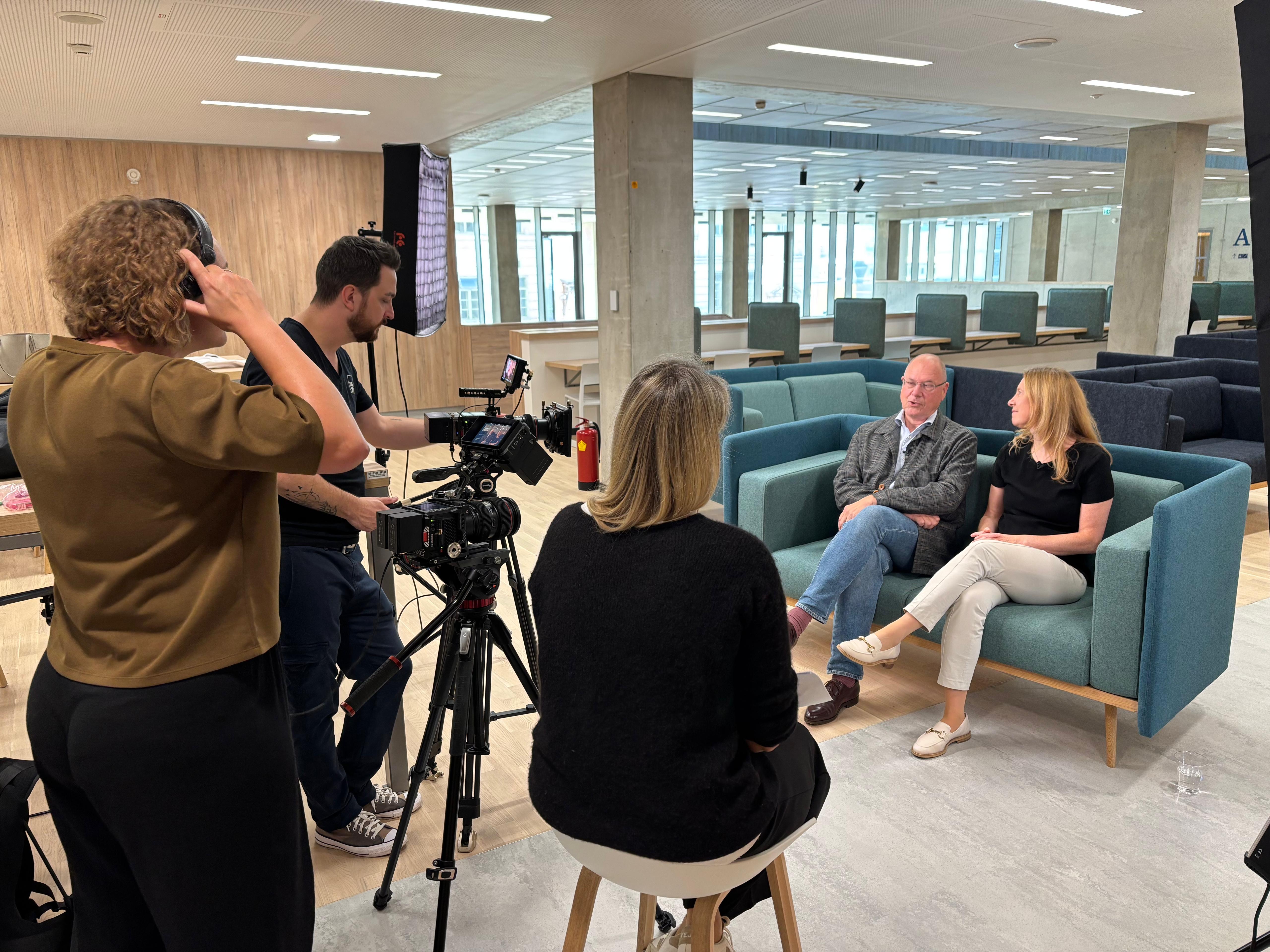
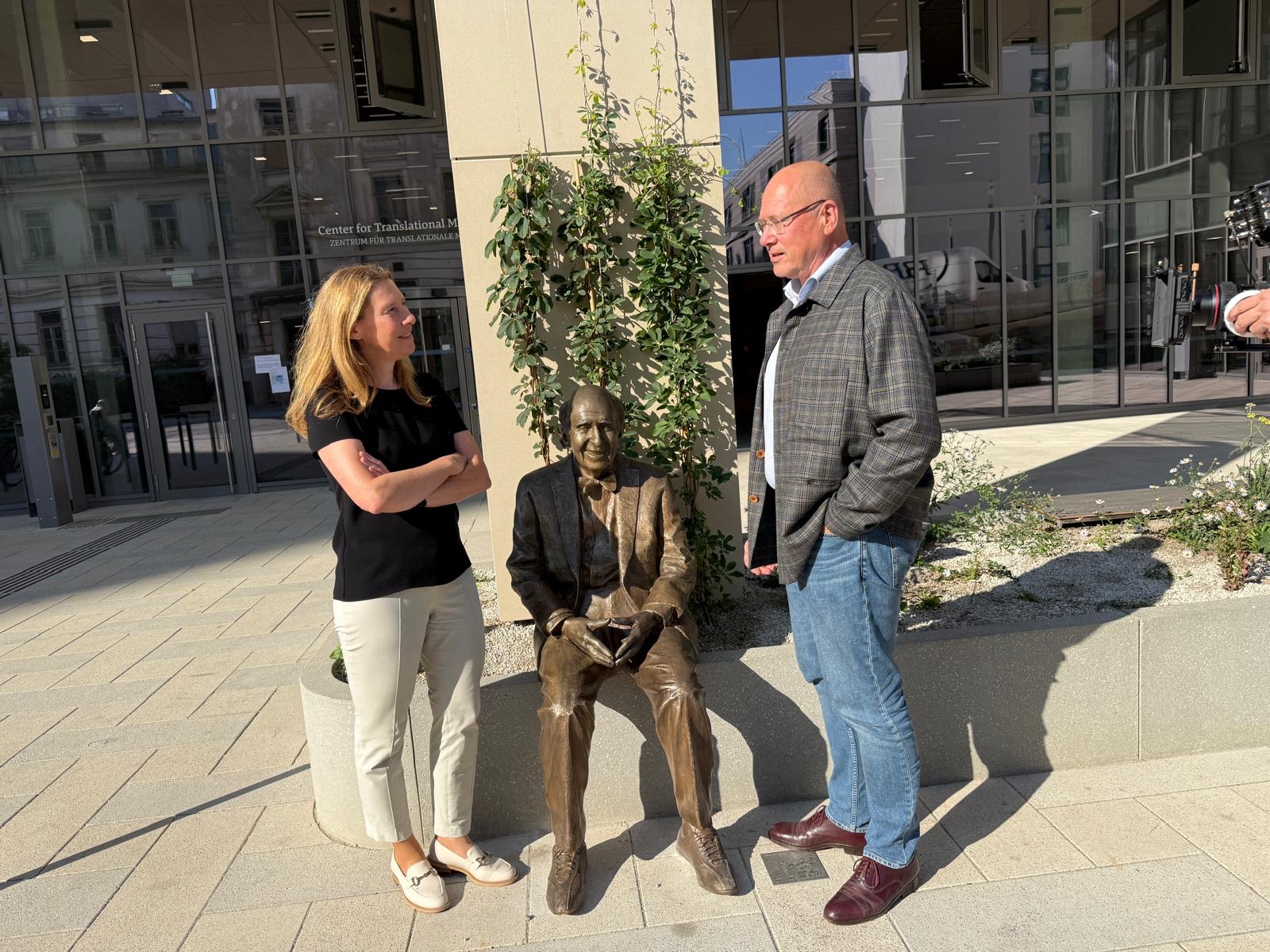
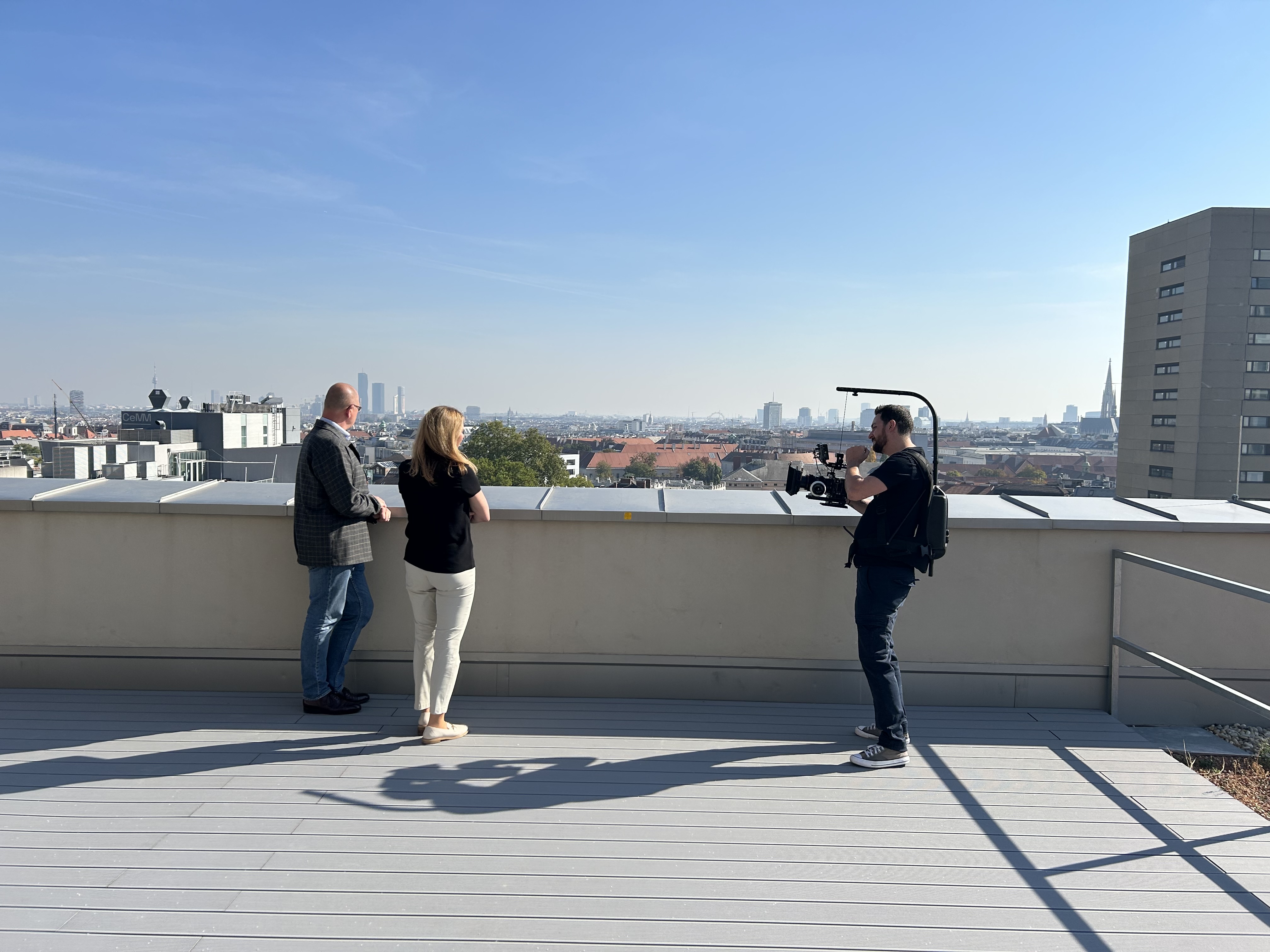
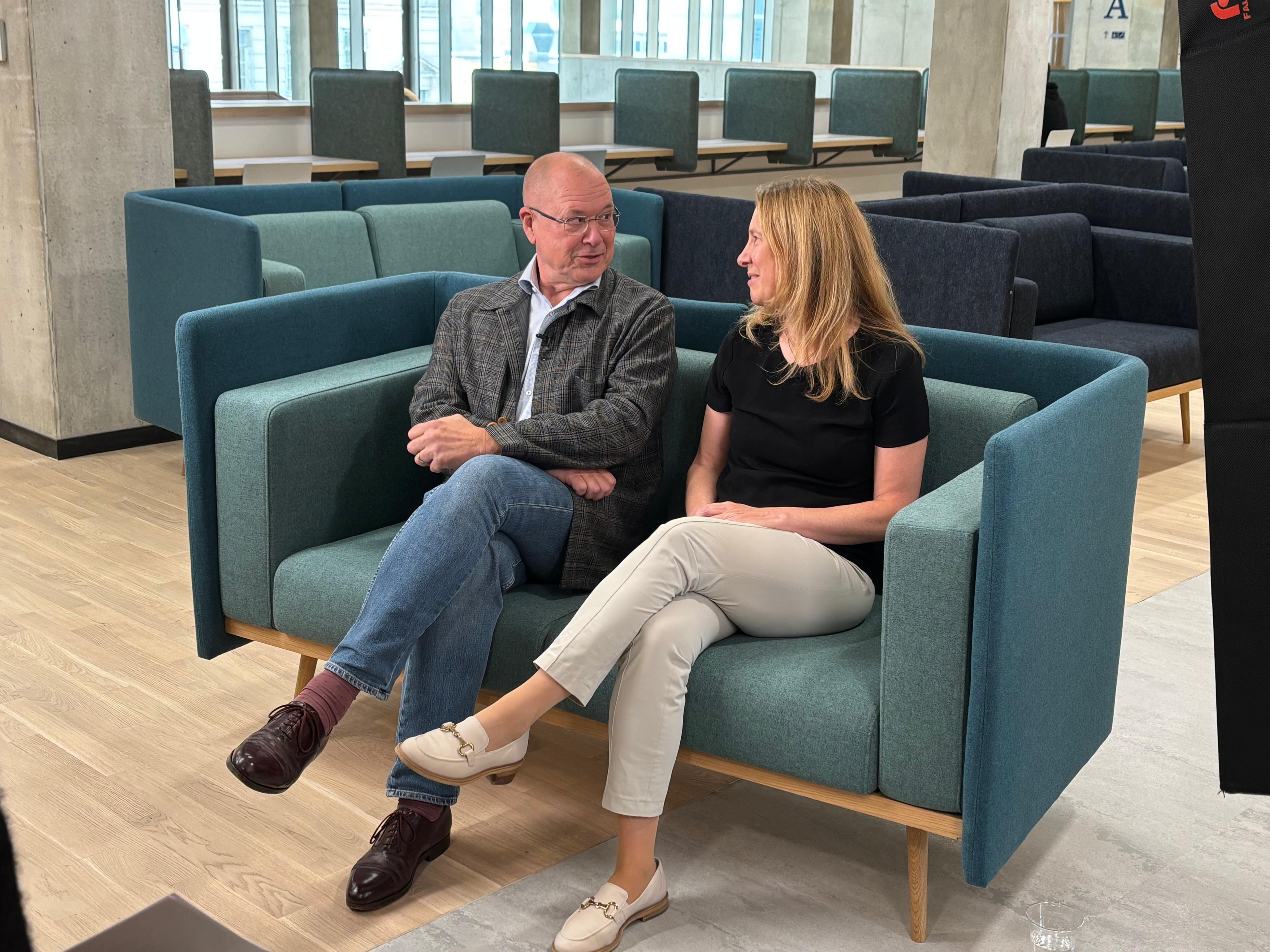
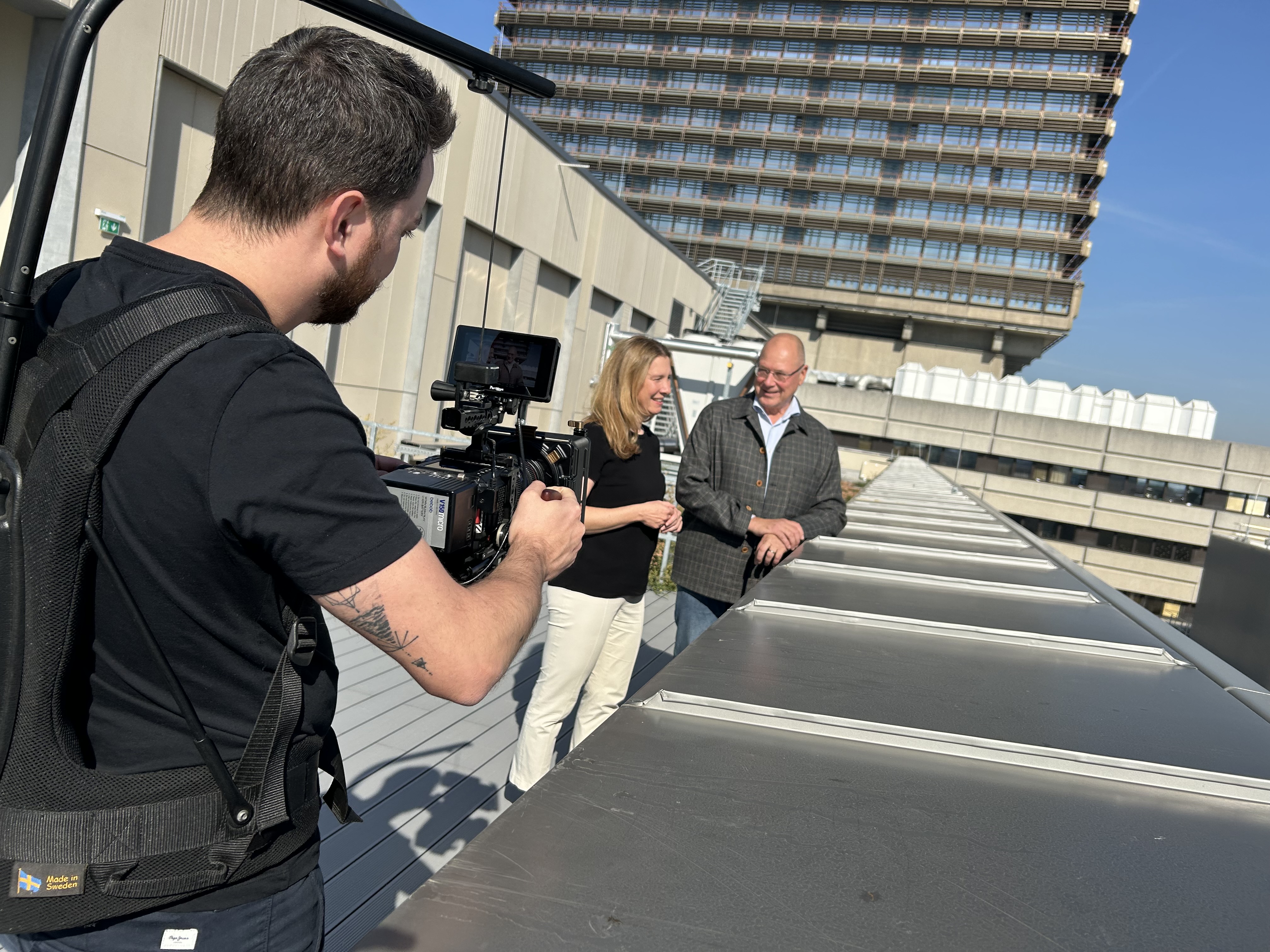
The right diagnosis at the right time for the right person, more targeted therapies and new insights into neurological disorders: the new Centre for Precision Medicine (CPM) at MedUni Vienna is opening up entirely new possibilities in this field. Romana Höftberger and Thomas Berger explain why state-of-the-art laboratories, access to shared technologies and, above all, collaboration between researchers are driving medicine forward.
After activation, data will be sent to YouTube. Further information here: Data protection
More space for medical research, state-of-the-art equipment and new ways of collaborating: for Romana Höftberger and Thomas Berger, moving into the Centre for Precision Medicine (CPM) is linked to high expectations. “The greatest joy is having more research space,” says Berger, Head of the Department of Neurology, summing up a key advantage. For Höftberger, Head of the Division of Neuropathology and Neurochemistry, it is not just about the extra square metres: “We can now move into laboratory facilities equipped with the very latest technology, where our researchers can give free rein to their experiments and creativity.”
The focus is on a medical approach that increasingly addresses the individual characteristics of diseases. “Precision medicine means making the right diagnosis for the right patient at the right time,” explains Höftberger. Particularly in the case of neurological disorders, it is crucial to understand disease processes as accurately as possible in order to refine diagnoses and apply treatments in a more targeted manner.
The CPM offers new opportunities in this regard. Alongside state-of-the-art analytical equipment, the biobank’s expanded storage capacity also plays a key role. “Thanks to the new research facilities, the new equipment made available to us there and, above all, the storage space in our biobank, it will be possible to systematically analyse a large number of samples,” says Höftberger. These new methods are also intended to further optimise and refine diagnostic procedures.

“These buildings are sure to be a magnet on the international stage, attracting young researchers from all over the world.”
More space for medical research, state-of-the-art equipment and new ways of collaborating: for Romana Höftberger and Thomas Berger, moving into the Centre for Precision Medicine (CPM) is linked to high expectations. “The greatest joy is having more research space,” says Berger, Head of the Department of Neurology, summing up a key advantage. For Höftberger, Head of the Division of Neuropathology and Neurochemistry, it is not just about the extra square metres: “We can now move into laboratory facilities equipped with the very latest technology, where our researchers can give free rein to their experiments and creativity.”
The focus is on a medical approach that increasingly addresses the individual characteristics of diseases. “Precision medicine means making the right diagnosis for the right patient at the right time,” explains Höftberger. Particularly in the case of neurological disorders, it is crucial to understand disease processes as accurately as possible in order to refine diagnoses and apply treatments in a more targeted manner.
The CPM offers new opportunities in this regard. Alongside state-of-the-art analytical equipment, the biobank’s expanded storage capacity also plays a key role. “Thanks to the new research facilities, the new equipment made available to us there and, above all, the storage space in our biobank, it will be possible to systematically analyse a large number of samples,” says Höftberger. These new methods are also intended to further optimise and refine diagnostic procedures.
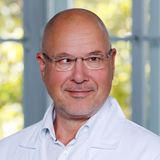
“The really good things happen informally in passing over a cup of coffee, where everyone simply exchanges ideas and perspectives – or perhaps even ideas that sound absurd – with one another.”
For Berger, this also includes a scientific culture that allows for experimentation and mistakes. “Science and scientific projects are a constant process of trial and error,” he emphasises. It is important, he says, to learn from mistakes rather than repeating them over and over again. Creative ideas, unusual questions and a willingness to try new approaches are, for him, essential prerequisites for scientific innovation. For this to happen, mutual exchange is crucial.
However, the new research buildings are not intended merely to provide fresh impetus within the university. Berger also sees them as conveying a message to society. “These buildings are also meant to be a beacon, a visible beacon,” he says. Particularly in times of widespread scepticism towards science, he argues, it is important to make research visible and accessible. Science must not be perceived as something that takes place exclusively in secret and behind closed doors.
The CPM is also set to open up new perspectives internationally. Höftberger is convinced that the modern infrastructure and the direct link between research and clinical care will further enhance the location’s appeal. “These buildings are sure to be a magnet, internationally speaking, and will attract young researchers from all over the world,” she says. The close link between theory and practice is particularly valuable: “There is nothing more attractive than close collaboration between clinical practice and research, because that is, of course, how the best data can be generated.”