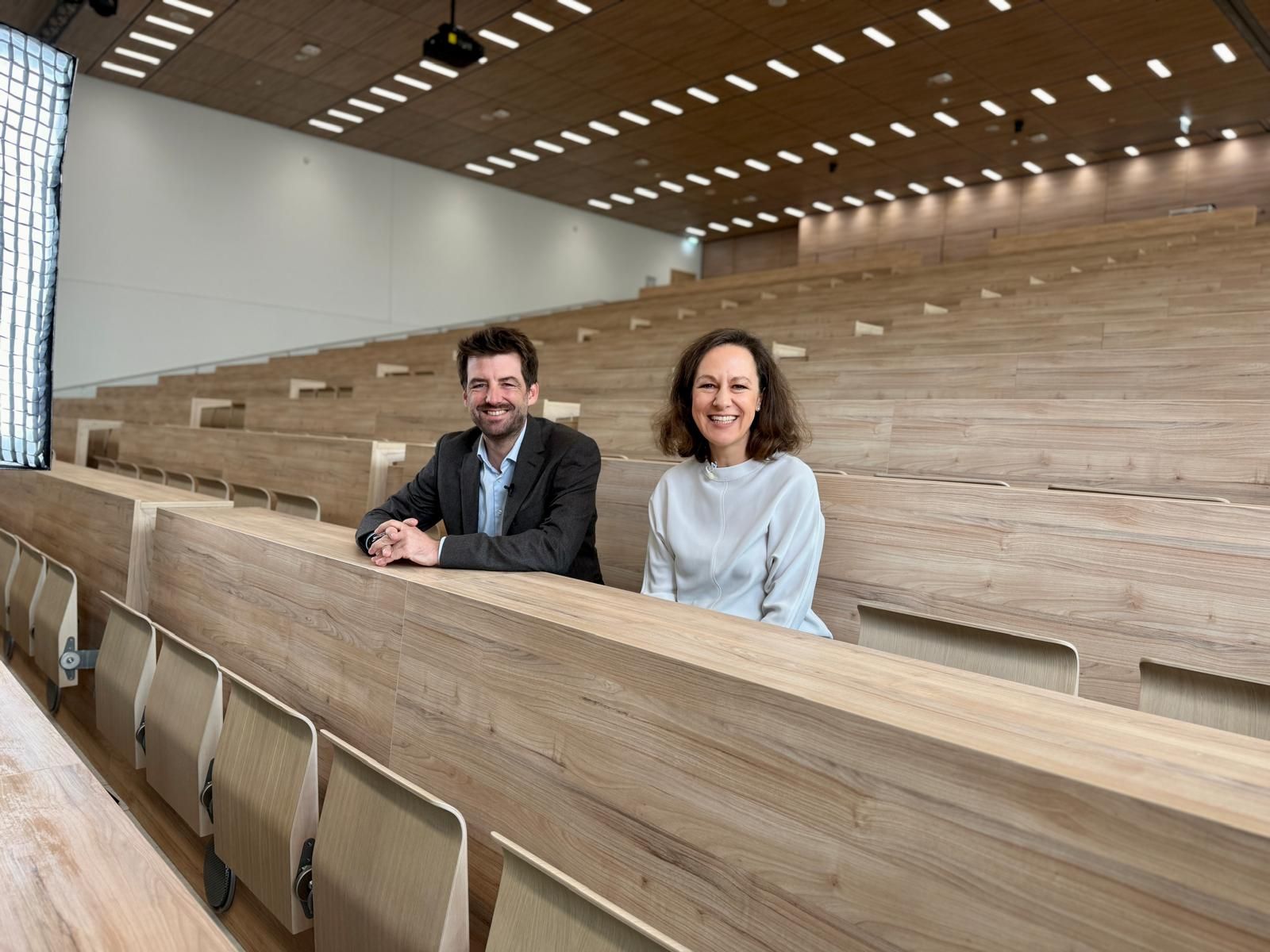
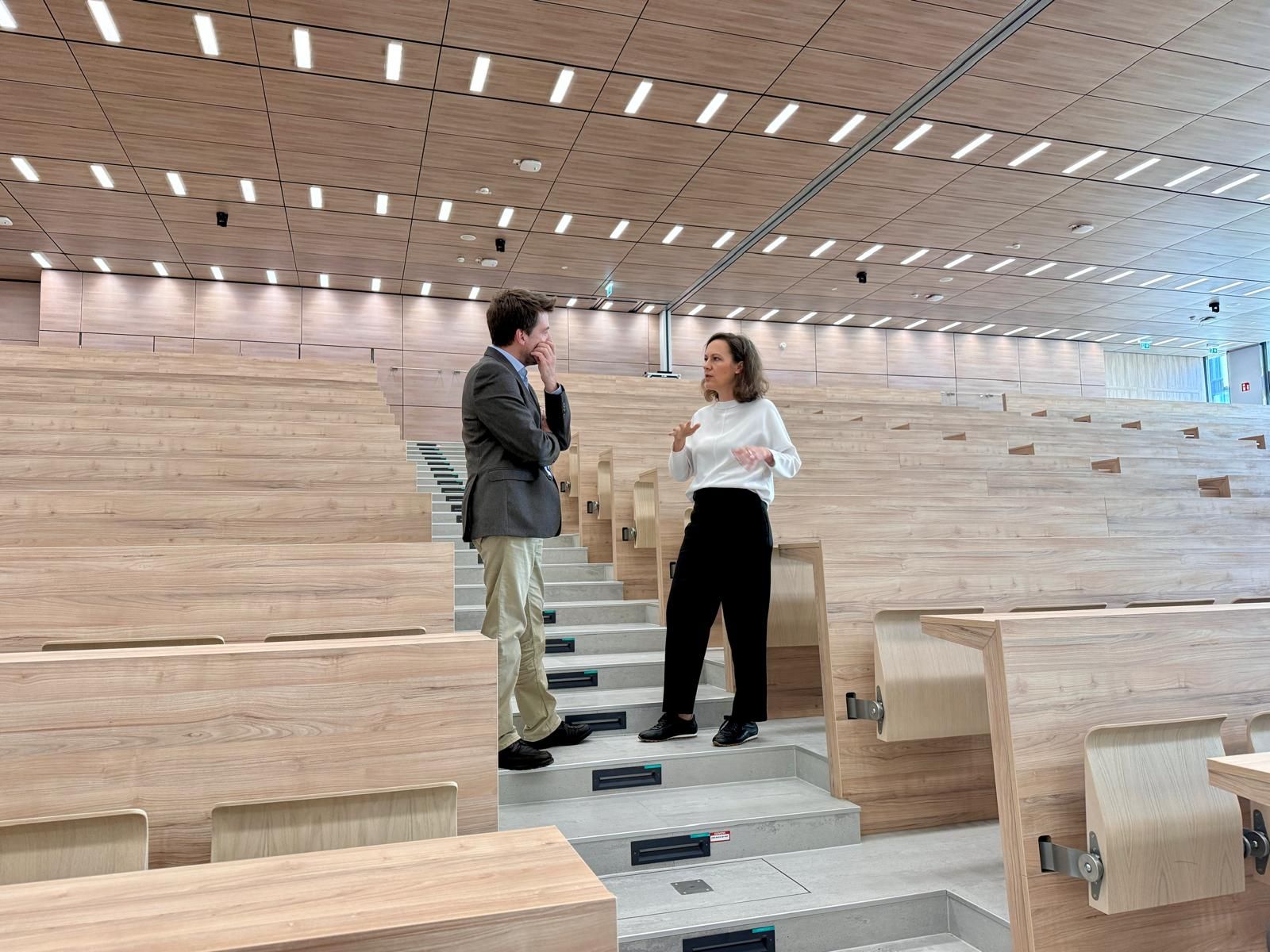
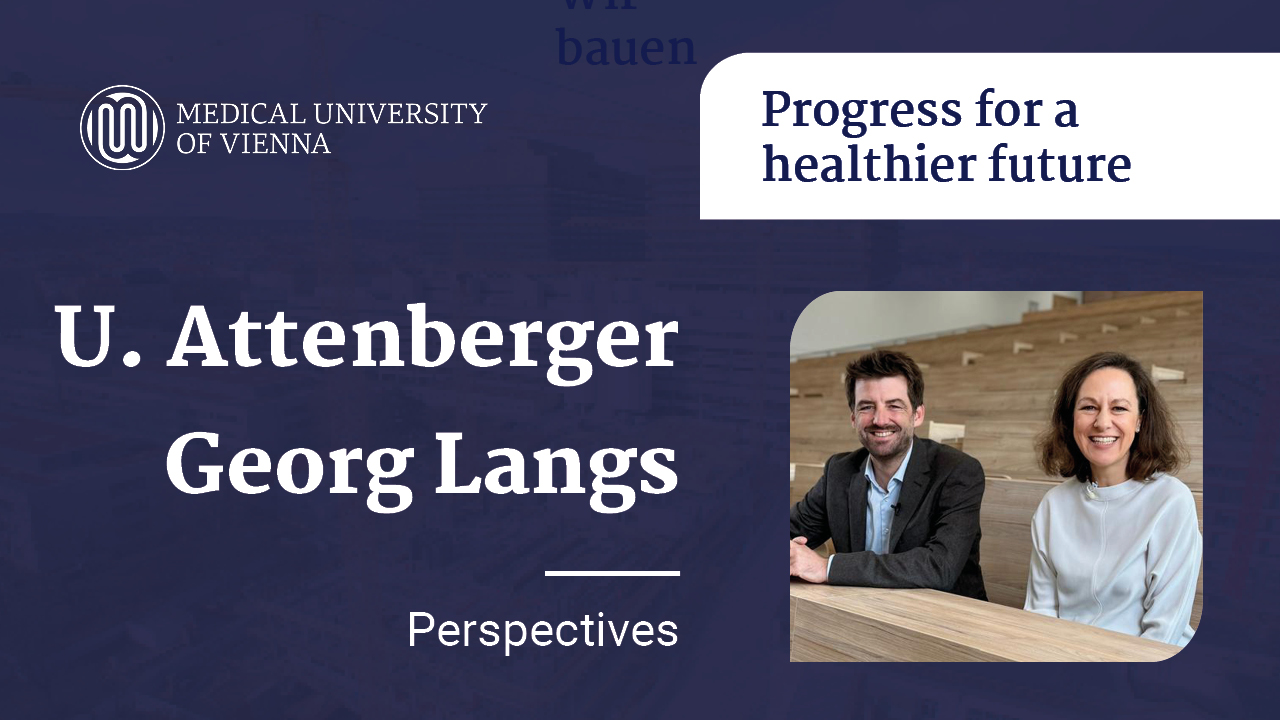
How does medicine change when medical knowledge, biology, mathematics and computer science come together in one place? The new Centre for Translational Medicine (CTM) creates space for interdisciplinary collaboration, thereby opening up new digital avenues for precision medicine that enables research findings to be put to use for patients more quickly. Ulrike Attenberger and Georg Langs offer insights into this modern vision of medicine.
After activation, data will be sent to YouTube. Further information here: Data protection
“Digital health is definitely the topic of the future in medicine,” says Ulrike Attenberger, Head of the Department of Biomedical Imaging and Image-Guided Therapy. The digitisation of medical information lays the groundwork for analysing large volumes of data using artificial intelligence and making this information usable for the treatment of patients.
Georg Langs, Head of the Comprehensive Centre for Artificial Intelligence in Medicine, describes the opportunities this presents. “Machine learning in this context means that we learn from real patients so that we can make better decisions for them,” he explains.
One specific example is cancer treatment: with the help of machine learning, it might be possible to determine early on during chemotherapy whether a treatment will be successful. On this basis, doctors could then ‘decide at an early stage whether we can switch to a different treatment, or whether we can or should carry out an operation’, according to Langs.
“I think what’s exciting about the CTM is that scientists from the fields of engineering, medicine and biology will be working in close proximity to one another. […] Collaboration takes place almost everywhere, but when you bring it together under one roof, it also means that it is put into practice in a meaningful way.”
For such applications to emerge, different scientific disciplines must work closely together. For Langs, this is precisely where the new CTM’s particular strength lies. “I think what’s exciting about the CTM is that scientists from engineering, medicine and biology will be working in close proximity to one another,” says Langs. After all, the connection between mathematics, medicine and biology “simply comes about through an incredible number of discussions”.
Interactions between young researchers from different disciplines are particularly important. On the one hand, this helps to clarify which medical problems can be solved using mathematical methods. On the other hand, medical professionals gain a better understanding of the possibilities that machine learning actually offers.
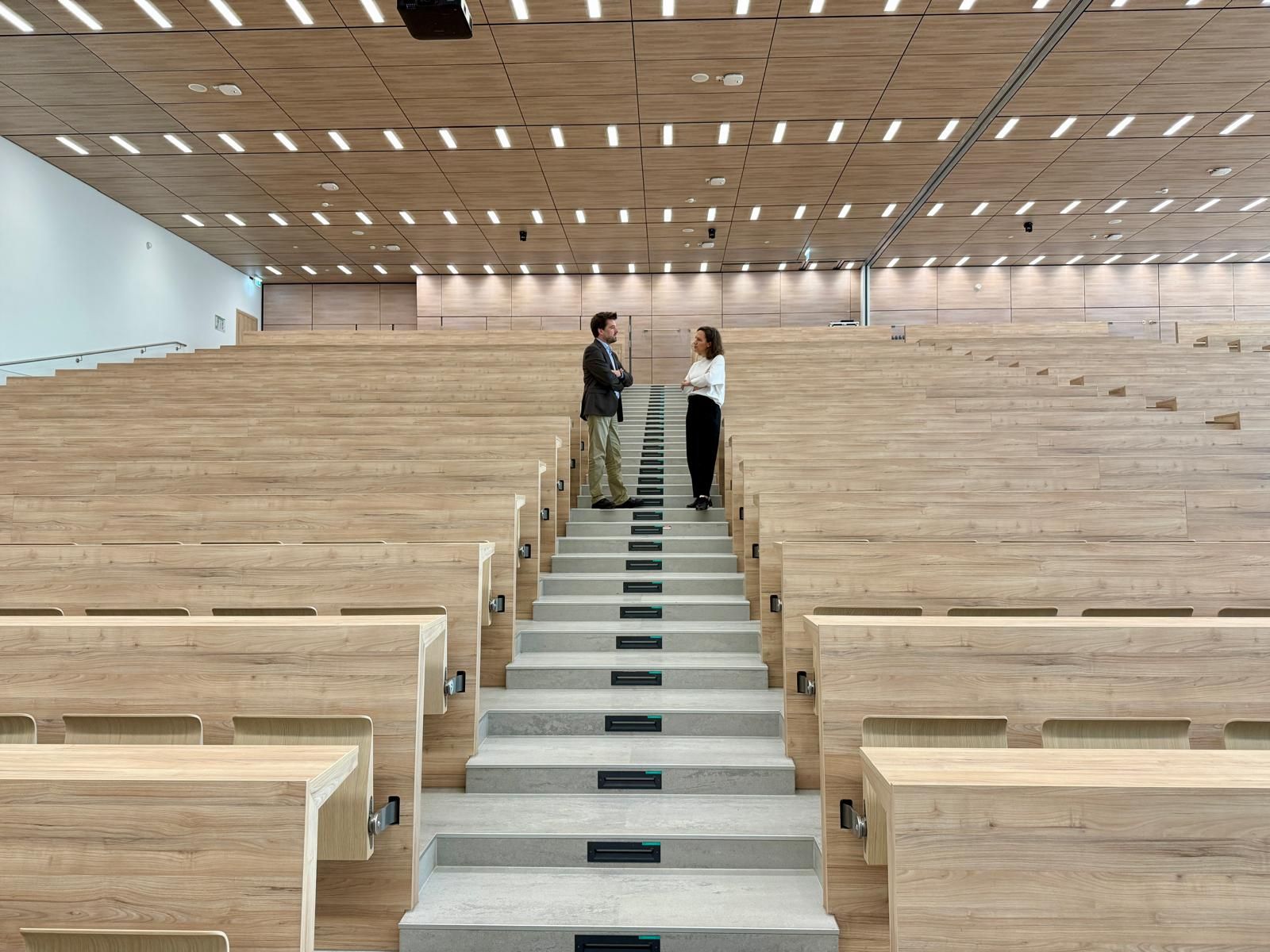
Attenberger also sees this as a key advantage. “The physical proximity alone is, of course, the perfect breeding ground for a more intensive exchange.” The CTM not only creates new research spaces for this purpose, but also an environment that fosters interaction and creativity. Attenberger is also enthusiastic about the architecture: “I think these are simply beautifully designed spaces with an incredible amount of light.” Such an environment, he says, is an important foundation for feeling at ease and being able to carry out good academic work.
‘The CTM not only creates new research spaces for this purpose, but also fosters an environment that encourages interaction and creativity.’
Langs is looking forward to working in the heart of a diverse research environment in future: “I’m looking forward to getting out of the office and being surrounded by research groups from a wide range of disciplines – from surgery to neurology – all of whom are working on machine learning, yet are all based in one place.”
For Langs, this is a distinctive feature of MedUni Vienna as a centre of research. “It is also a unique selling point of MedUni that wet-lab researchers and technical, data-driven researchers are all based in one place here. Collaboration takes place almost everywhere, but when you make this the focus of a centre, it also means that it is put into practice accordingly.”
The CTM thus represents a form of medicine in which digital data, artificial intelligence and clinical experience are becoming increasingly intertwined. For Attenberger, the CTM lays the groundwork for the medicine of tomorrow: “I believe that, with this building, MedUni Vienna is perfectly equipped to answer the questions of the future.”