
How does research lead to medical progress? By sharing knowledge, pooling resources and breaking down the barriers between research and patient care. MedUni Vienna’s new research buildings and close collaboration with partner institutions are creating new opportunities to achieve this and have a clear aim: to bring scientific findings to patients more quickly and make them accessible to society.
After activation, data will be sent to YouTube. Further information here: Data protection
Science needs trust. Especially when health issues are a concern for society, Michaela Fritz, Vice-Rector for Research and Innovation at MedUni Vienna, believes that universities have a responsibility to make research understandable and accessible. “This trust is not built through headlines, but by being open and explaining very clearly what we do and how we conduct our research,” says the Vice Rector for Research and Innovation at MedUni Vienna. Events such as the Long Night of Research, which attracts more than 10,000 visitors, make an important contribution to this. For Fritz, this is about more than just communicating science. Trust in research and evidence also strengthens trust in institutions and in democracy.
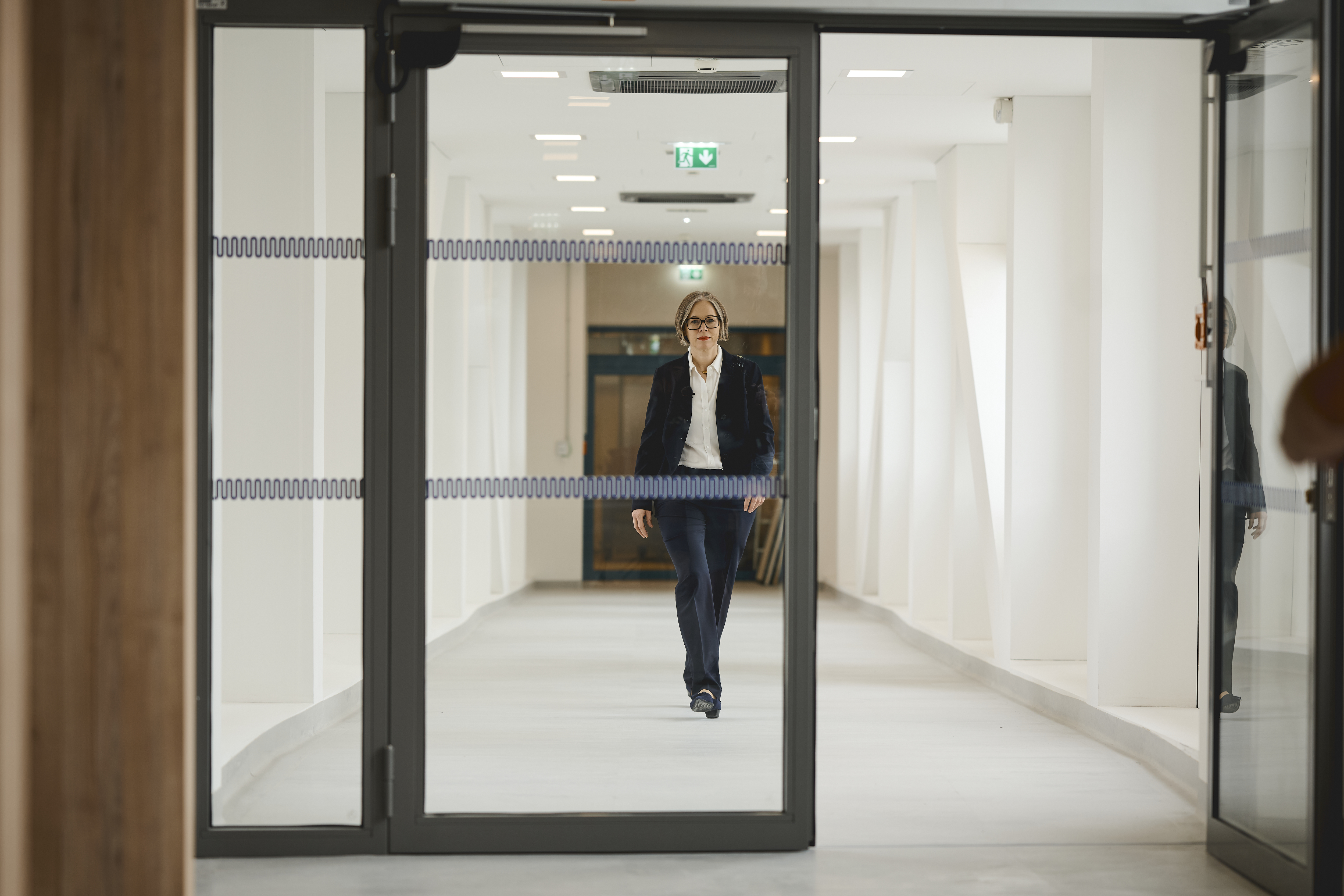
The Centre for Translational Medicine (CTM) provides a new venue for this openness. Fritz sees its entrance hall as the heart of the new MedUni Vienna campus: “This is to become a place where students and lecturers, clinicians and researchers can come together.” It is also intended to be a place for dialogue with the public and with society.
For her, interaction and exchange are essential for successfully translating scientific findings into practical application: “We will need this place and these encounters to make translation a success.”
This aspiration is particularly evident on the bridge linking the CTM and the University Hospital Vienna (AKH). 23 metres long and held together by 2,000 bolts, it connects the research centre and the hospital. For Fritz, it represents far more than just architecture: “It truly represents the shortest link between research and patient care.” Scientific questions can arise on both sides of this bridge – in research as well as in clinical practice. “Ideally, scientific findings directly benefit patients.”
Translation does not operate within institutional boundaries. “In translational medicine, the development of therapies and diagnostics can only succeed through partnership, when different institutions pool their individual strengths,” emphasises Fritz. To this end, a close-knit network of university and non-university research and clinical care is taking shape around the MedUni Campus AKH. In addition to MedUni Vienna, these include, amongst others, the Centre for Molecular Medicine (CeMM), St Anna Children’s Hospital and St Anna Children’s Cancer Research. “We are working together to develop new technologies and therapies here.”
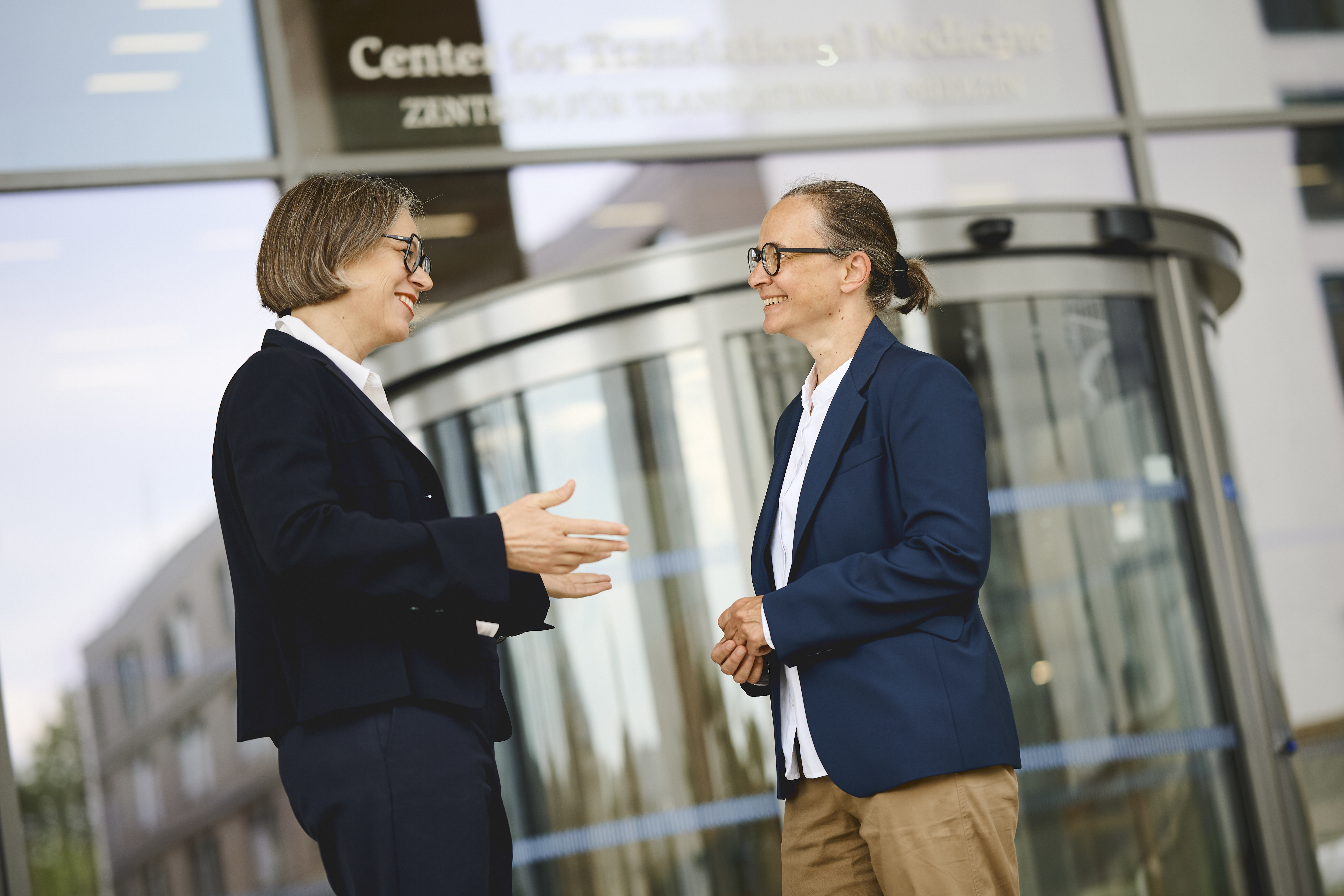
Caroline Hutter, Medical Director of St Anna Children’s Hospital, also emphasises just how much this collaboration is already a reality in practice, citing, amongst others, surgery, nuclear medicine, radiotherapy and orthopaedics: “The collaboration between MedUni Vienna and St Anna is special because it takes place at a wide variety of levels.” The focus is on the immediate benefits for young patients: “We want to provide our children with the very best care. Together, we are working to ensure that our patients have access to new treatments.”
These new research buildings will further strengthen this network. The Centre for Translational Medicine (CTM) and the Eric Kandel Institute – Centre for Precision Medicine (CPM) are creating new opportunities to forge closer links between basic research, translational medicine and clinical application.

“We want to excel in areas where research makes a significant difference: in the study of fundamental mechanisms, in precision medicine, in prevention and in the development of new therapies.”
For Fritz, this also entails an ambition regarding the university’s international standing: with the new research buildings, MedUni Vienna aims to “rank amongst the leading centres of excellence in the field of translational research”. Crucial to this are not only the buildings and infrastructure, but also the connections that are forged within them and beyond: between disciplines, institutions, research and clinical care, and, not least, between science and society.


